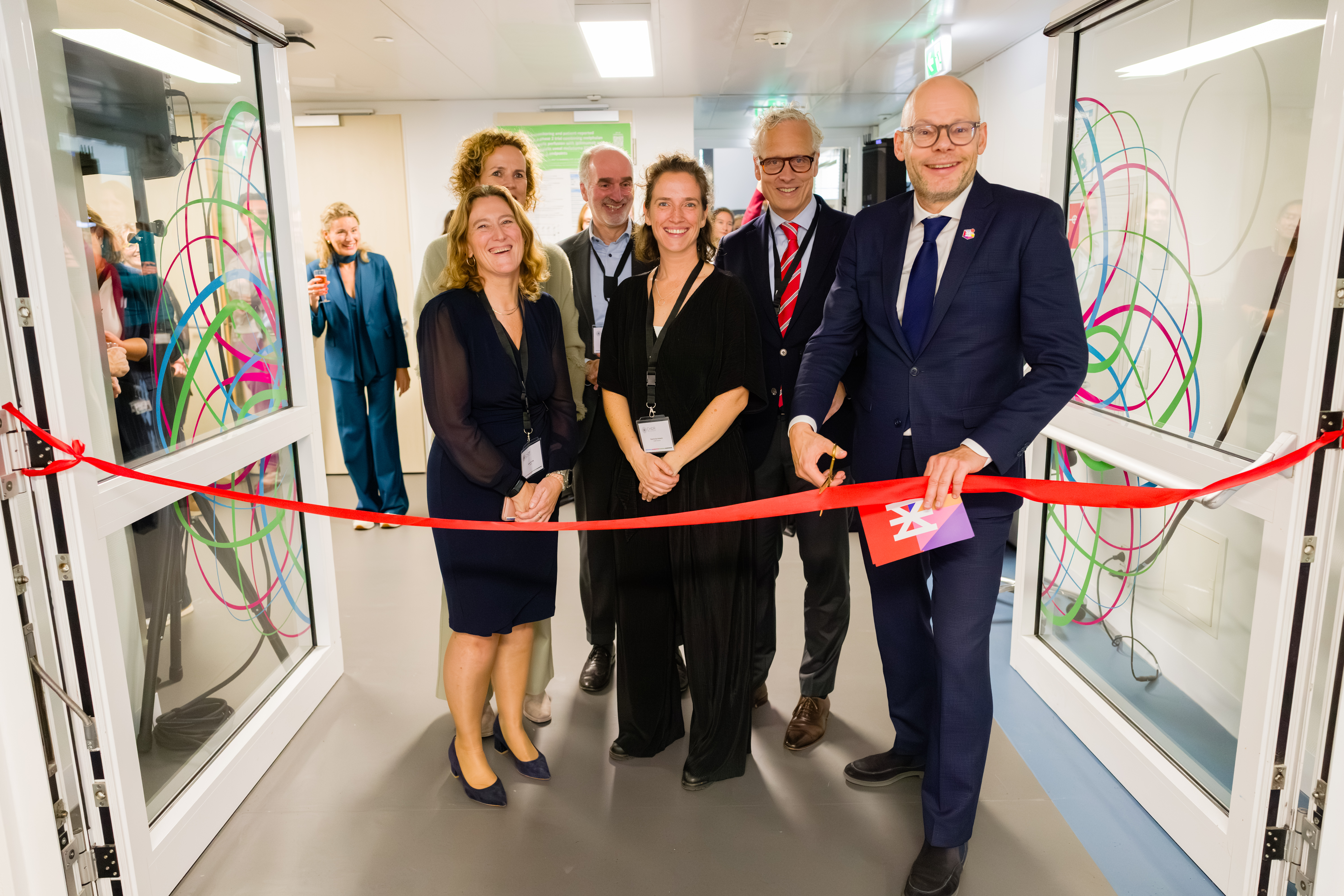
Clusters strengthen internal synergy
Internally, CHDR’s clinical research groups now collaborate in two clusters: Neuroscience and Immunology & Internal Medicine.
‘For our clients, nothing much will change. They will continue to deal with the people they know. For us, however, clustering leads to more efficient business operations, for example because senior clinical scientists can be deployed more flexibly,’ says Dr Matthijs Moerland, Research Director R&D lab and Immunology. ‘In terms of content and methodology, there is also much to be gained, especially within our cluster, as we use overlapping research methods and challenge models for healthy study participants and patients.’ The Immunology and Internal Medicine (I&I) cluster consists of Moerland's Immunology Group, the Dermatology Group headed by Prof. Robert Rissmann, the Internal Medicine Group headed by Dr Naomi Klarenbeek and the Infectious Diseases Group led by Dr Ingrid de Visser-Kamerling. The Neuroscience cluster brings together the Psychiatry Group (Dr Gabriel Jacobs), the Neurology Group (Dr Philip Kremer) and the Pain Group (Dr Marieke Niesters). Within this cluster, the collaboration focuses mainly on operational matters, as each group uses its own set of investigational tools.
Synergy
In the I&I cluster, the decision to work even closer together has created a new momentum, Moerland: ‘First of all, we want to reflect on what we are good at. Before we take new steps, it is very important that we know where our strengths lie, so that we can build on them.’ ‘Of course, all our groups were already collaborating closely in recent years,’ adds Rissmann. 'We have long cherished the ideal of the T-shaped professional: being able to delve deeply into your own field but also understanding and utilising the overlap with others. Our research efforts in immunology and dermatology have grown together. The skin remains an interesting target organ for many new immunomodulatory compounds, partly because you can see the effects so clearly.’ (See for example this article on a cytokine inhibitor).
The new approach to oncology CHDR is currently developing builds on existing expertise and the value of the immunological challenge models. But the novel developments in the field of metabolic disorders are also rooted in existing expertise. Klarenbeek: ‘In recent years, the Immunology Group has already laid a solid foundation with their work in the field of metabolic readouts in peripheral blood cells and studies on vasculature. Of course, I already worked with them a lot in the field of autoimmune diseases, where the Immunology Group does much of the work in healthy study participants and I focus more on patient studies. I look forward to continuing the collaboration in the field of metabolic disorders.’
The opportunities for synergy are also evident in the field of infectious diseases. ‘In terms of content, there is of course a lot of overlap with immunology,’ says De Visser. ‘And in the past few years, I have experienced how important it is to be able to set up something new. That is a lot easier under the wing of a larger cluster that is running well, providing the space to explore new directions. That approach is now starting to bear fruit in the field of infectious diseases.’
Interested in learning more?
More articles from 2025 stories